
:format(webp))
Online privacy, performance, and access control have become critical for individuals and businesses that rely on connected systems. The growing use of proxies reflects this shift. But what exactly are proxies used for, and how do they support the everyday operations of modern internet users and organizations?
This guide explores how proxies work, their main use cases, and how businesses of all sizes use them to improve data efficiency, security, and user experience. You’ll also see how platforms like SimplyNode.io simplify and scale these capabilities for data-driven teams.
What Is a Proxy?
A proxy acts as a go-between for your device and the internet. When you send a request to access a website, the request goes first to the proxy server. The proxy then forwards the request to the website, fetches the response, and sends it back to you.
This layer of separation hides your real IP address, filters content, and can even improve load times. It’s one of the simplest yet most flexible tools for controlling digital traffic.
According to Splunk, proxies are used to manage web traffic, enhance security, improve performance, and preserve anonymity by serving as intermediaries between clients and destination servers.
How Proxies Work
The process is straightforward but powerful:
You connect to a proxy server instead of going directly to a website.
The proxy modifies your request, masking your original IP and applying any security or filtering policies.
It then sends the request to the target site.
The website responds to the proxy, which passes the response back to you.
From your perspective, the entire interaction appears seamless, but your digital identity stays hidden.
Different types of proxies, such as residential, datacenter, or reverse proxies, handle specific network functions, from scraping data to protecting backend servers from direct exposure.
Common Uses of Proxies
1. Security and Anonymity
One of the most widespread uses of proxies is to protect user identity and strengthen security. By acting as a shield, proxies mask user IP addresses, making it harder for malicious sites or actors to track digital footprints.
Organizations often configure forward proxies as part of their cybersecurity stack to block harmful domains and prevent malware downloads. According to SecurityScorecard, proxies also help stop intrusions by filtering suspicious content and isolating internal networks from direct internet exposure.
Example:
A finance company can use a proxy to inspect outbound traffic and ensure that employees don’t accidentally connect to phishing sites or expose sensitive data.
2. Bypassing Restrictions
Governments, streaming platforms, and websites sometimes restrict content based on geographic location. Proxies can route traffic through a server in a different country, allowing users to bypass these limitations.
For businesses, this isn’t just about accessing media. Marketing teams, for example, use proxies to view competitor ads or websites as they appear to foreign visitors.
Example:
An e-commerce brand checks how its product pages render to customers in Europe and Asia through different proxy geolocations. This ensures pricing and promotions display correctly worldwide.
3. Performance and Load Balancing
Beyond privacy and access, proxies improve network efficiency. They can cache frequently visited pages and files, reducing bandwidth usage and speeding up access for users.
Reverse proxies, often used on the backend, balance incoming requests across multiple servers. This approach improves availability and prevents server overload during traffic spikes.
Fortinet notes that caching proxies significantly reduce latency by storing static content closer to users, while reverse proxies enhance resiliency by distributing workloads intelligently.
4. Content Filtering and Compliance
Companies use proxies to manage how users within the organization access online content. This often includes blocking social media, streaming sites, or unsafe pages.
Proxies can also record browsing activity for compliance audits, creating a detailed activity log. For industries like finance or healthcare, which must meet strict privacy requirements, this visibility is crucial.
Example:
A healthcare provider filters non-work websites during operating hours to limit distractions and minimize data exfiltration risks.
5. Data Collection and Market Research
Web scraping has become vital for competitive intelligence, SEO, and pricing analysis. However, most websites restrict automated scraping or throttle requests from a single IP.
That’s where large proxy networks come into play. By rotating through different IPs, they make data collection at scale feasible and less likely to trigger detection mechanisms.
According to IPRoyal, data and market research use cases account for a major share of proxy traffic worldwide, covering price tracking, sentiment analysis, and ad verification.
Example:
An analytics team uses residential proxies to scrape hotel pricing data from 50 different regions daily. Rotating proxies prevent their requests from being blocked or flagged as bots.
SimplyNode.io supports this through reliable proxy endpoints designed for developers who need scale, stability, and geographic diversity for scraping or automation tasks.
Proxies in Cloud and Web3 Infrastructure
While proxies are often discussed in the context of browsing or scraping, their role extends further into infrastructure-level technologies. Cloud platforms and blockchain-based environments rely on proxy layers to balance network loads and secure API gateways.
SimplyNode.io, for example, integrates proxy-like logic into its blockchain node infrastructure to manage high request volumes efficiently. Rather than each developer manually configuring multiple nodes, SimplyNode handles routing through managed networks that ensure continuity and low latency.
This integration simplifies secure data flow between users and blockchain nodes without revealing sensitive endpoints or overloading servers.
Types of Proxies and When to Use Them
Each type of proxy serves a specific function. Here’s how they differ:
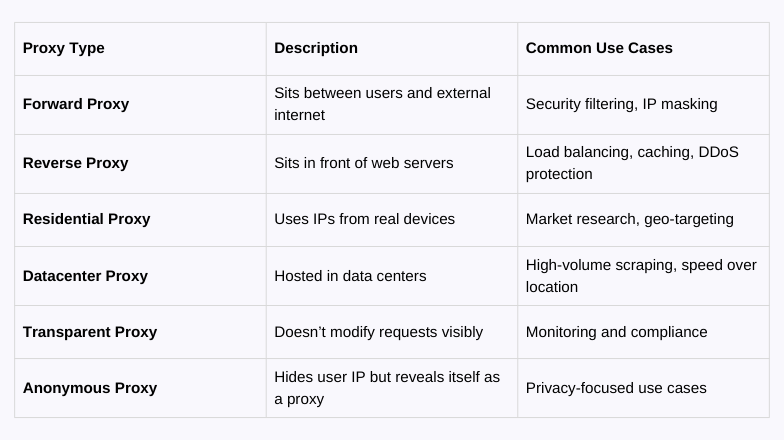
Knowing which type aligns with your needs helps balance performance, privacy, and control.
The Business Value of Using Proxies
Proxies provide measurable benefits when implemented well:
Cost efficiency: Cached data reduces redundant bandwidth use.
Risk reduction: Better network monitoring and filtering prevent costly breaches.
Operational insight: Access to global data through proxies improves business strategy.
According to Cybersecurity Ventures, the global cost of cybercrime is projected to grow by 15 percent annually, reaching $10.5 trillion by 2025. Proxy-based security layers can play a key part in minimizing exposure to such threats.
For companies running large-scale data workflows, integrating proxy management can streamline traffic distribution, elevate uptime, and enable safe automation.
Why Developers Choose SimplyNode.io
Developers looking to scale blockchain or data-intensive applications often require proxy reliability combined with global reach. SimplyNode.io delivers this by offering:
Fast, managed endpoints with intelligent routing
Global coverage for distributed workloads
Built-in reliability monitoring and automated scaling
This infrastructure reduces the time developers spend maintaining hundreds of connections or rotating IPs. Traffic is handled securely and efficiently across a resilient network.
While many providers focus purely on proxies for scraping or anonymity, SimplyNode optimizes them as part of a broader performance and scalability toolkit.
Conclusion
Proxies aren’t just privacy tools; they’re infrastructure components shaping how data moves across networks. From security and compliance to analytics and load balancing, their uses span nearly every digital workflow.
With the right setup, proxies give businesses control over traffic visibility, user privacy, and access speed.
If your team needs reliable, high-performance proxy nodes for data analysis, blockchain access, or automation, SimplyNode.io offers a simple, scalable solution. Start exploring how managed proxy infrastructure can strengthen your projects and reduce maintenance overhead.
:format(webp))
:format(webp))
:format(webp))